
Product categories
- Women
- Men
- Couples
- Fetish
- Lingerie
- Funny sextoys
- Offers
Filter by price
🛡️ BODY-SAFE PRODUCTS
🔒 SECURE PAYMENT
📦 DISCREET SHIPPING
Vegan Lubricants – Full Performance Without Animal-Derived Ingredients
“Vegan” in lubricant formulation does not mean removing ingredients. It means replacing them with alternatives that deliver identical or superior performance without involving animals at any stage of the production chain. Glycerin sourced from animal fats is replaced with plant-derived glycerin (functionally identical — the molecule is the same regardless of source). Beeswax is replaced with plant-based emulsifiers (candelilla wax, carnauba wax, or synthetic alternatives). Carmine (a red pigment derived from crushed cochineal insects) is replaced with synthetic or plant-based colourants. Lanolin (extracted from sheep’s wool) is replaced with plant-derived moisturisers. None of these substitutions need to compromise functional performance — but they require the formulator to actively select alternatives rather than defaulting to the cheapest available raw materials. A vegan lubricant is a deliberate formulation choice, not a limitation.
The “vegan” designation encompasses two separate commitments that are often conflated but are technically distinct. Ingredient sourcing: no animal-derived components in the final product (no glycerin from animal fats, no beeswax, no casein, no collagen, no animal-derived stearic acid). And cruelty-free production: the product and its individual ingredients have not been tested on animals at any stage of development. A product can be vegan (no animal ingredients) but not cruelty-free (tested on animals during development), or cruelty-free (not tested on animals) but not vegan (contains beeswax or animal-derived glycerin). The most ethically comprehensive products are both — certified by organisations like The Vegan Society, PETA’s Beauty Without Bunnies programme, or Leaping Bunny, which verify both ingredient sourcing and testing practices through independent audit.
From a performance perspective: modern plant-based formulation science produces lubricants that are functionally indistinguishable from their animal-derived counterparts. Plant-derived glycerin has the same molecular structure (C₃H₈O₃) as animal-derived glycerin — it behaves identically as a humectant (moisture-retaining agent) in the formulation. Plant-based thickeners (xanthan gum, hydroxyethylcellulose, guar gum) provide equivalent viscosity control to animal-derived alternatives. The functional chemistry does not change — only the sourcing does. This means choosing a vegan lubricant involves no performance sacrifice for the user — the decision is purely ethical, with no trade-off in slip, longevity, feel, or compatibility.
For water-based options that are commonly available in vegan formulations, Water-Based Lubricants covers the broadest range. For silicone-based options (which are inherently free of animal-derived ingredients in most formulations), Silicone-Based Lubricants provides naturally vegan-compatible options. For flavoured vegan options suitable for oral sex, Flavored Lubricants includes plant-based flavouring options. The parent Lubricants section provides the complete base-system comparison.
Showing all 6 resultsSorted by popularity
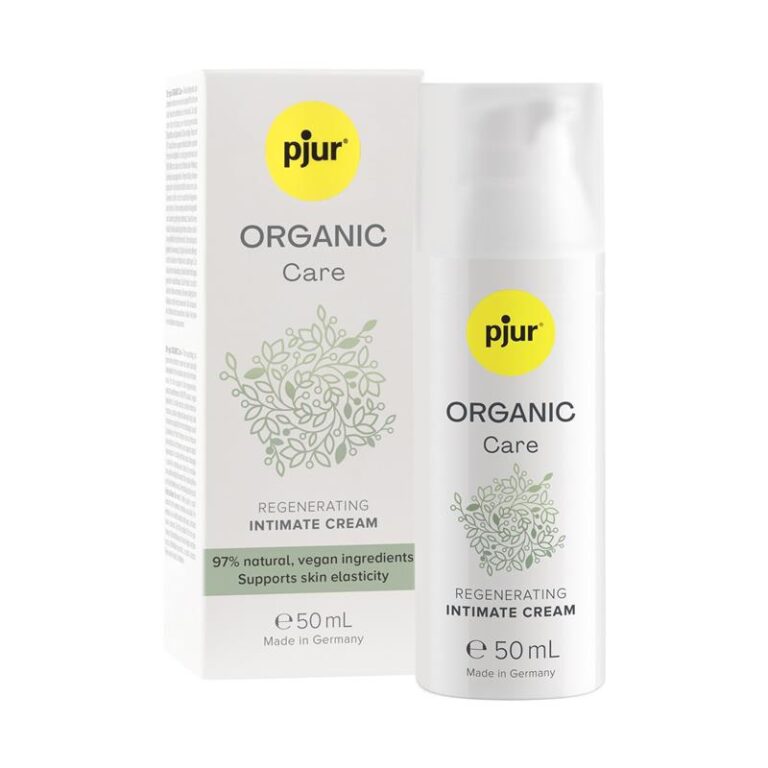
Intimate Cream Vegan Organic Care 50 ml

Water-Base Lubricant Vegan Organic Touch 100 ml

Water-base Lubricant Vegan 30 ml

Intimate Cleaner Vegan Organic Fresh 150 ml

Pjur Med Vegan Glide 100ml

Water-base Lubricant Vegan 100 ml
Common Animal-Derived Ingredients And Their Plant-Based Replacements
Glycerin is the most frequently encountered ingredient that may be animal-derived. In conventional formulations, glycerin is often a byproduct of soap manufacturing using animal fats (tallow). Plant-derived glycerin comes from vegetable oils (coconut, palm, soy) through the same saponification or hydrolysis process — producing a chemically identical molecule. On an ingredient label, "glycerin" alone does not indicate the source — only products specifically labelled "vegetable glycerin" or certified vegan guarantee plant origin. For consumers who want certainty: look for third-party vegan certification rather than relying on ingredient list interpretation alone, as the source of common ingredients like glycerin, stearic acid, and cetyl alcohol is not always disclosed on packaging.
Less obvious animal-derived ingredients include: casein (a milk protein sometimes used as an emulsifier), collagen (sometimes added for "skin benefit" marketing claims), squalene (traditionally sourced from shark liver oil — though plant-derived squalane from olives is now common), and certain forms of vitamin E (tocopherol can be derived from animal or plant sources). Preservative systems may also involve animal-derived components in some formulations. The complexity of supply chains means that even well-intentioned brands may unknowingly use animal-derived sub-ingredients unless they specifically audit their entire supply chain — which is why independent third-party certification provides more reliable assurance than self-declared "vegan" claims on packaging.
Certification Standards — What The Labels Actually Mean
The Vegan Society trademark (the oldest and most recognised vegan certification globally) requires: no animal ingredients, no animal testing of the finished product or its ingredients, and no cross-contamination with animal products during manufacturing. Products carrying this trademark have been independently audited against these criteria. PETA's "Beauty Without Bunnies" certification focuses specifically on the cruelty-free aspect (no animal testing) but does not necessarily verify ingredient sourcing — a product can be PETA-certified cruelty-free while still containing beeswax or animal-derived glycerin. Leaping Bunny certification (administered by Cruelty Free International) verifies no animal testing at any stage of production including ingredient suppliers — it is considered one of the most rigorous cruelty-free standards but does not address ingredient sourcing.
Self-declared claims ("vegan," "cruelty-free," "plant-based") on product packaging without third-party certification are not independently verified — they rely on the brand's own interpretation and honesty. While many brands making these claims are genuine: the absence of regulatory definition for terms like "vegan" in cosmetics means there is no legal consequence for inaccurate claims in many jurisdictions. For consumers who prioritise verified ethical sourcing: look for recognised third-party certification logos rather than marketing language alone. For consumers who are less concerned with absolute verification: self-declared vegan claims from established, transparent brands are generally reliable — particularly brands that publish full ingredient lists and sourcing information on their websites.
Frequently Asked Questions
1. Do vegan lubricants perform as well as non-vegan ones?
Yes — there is no inherent performance difference. The functional chemistry of a lubricant (its slip, viscosity, longevity, and feel) is determined by the molecular properties of its ingredients — not by whether those molecules came from an animal or a plant. Plant-derived glycerin is molecularly identical to animal-derived glycerin. Plant-based thickeners provide equivalent viscosity to animal-derived alternatives. The formulation science is the same — only the sourcing differs. A well-formulated vegan lubricant is indistinguishable in use from a well-formulated non-vegan lubricant. The choice is ethical, not functional.
2. Are silicone-based lubricants automatically vegan?
In most cases: yes — silicone (polydimethylsiloxane) is a synthetic polymer derived from silicon, oxygen, carbon, and hydrogen. It is not sourced from animals. Pure silicone lubricants with no additional ingredients beyond silicone polymers and possibly vitamin E (if plant-derived) are typically vegan by composition. However: "vegan" also requires no animal testing — and some silicone lubricant brands may test on animals even though their ingredients are plant/mineral-derived. For certainty: check for vegan certification that covers both ingredients AND testing practices. The ingredient composition of most silicone lubricants is inherently vegan-compatible — the testing practices are where the distinction may lie.
3. How do I know if a lubricant contains animal-derived glycerin?
Unfortunately: the ingredient label alone typically does not specify the source. "Glycerin" or "glycerol" on a label could be animal-derived or plant-derived — the chemical name is the same regardless of origin. To determine the source: look for products that specifically state "vegetable glycerin" or "plant-derived glycerin" on the label, check for vegan certification (which verifies all ingredient sources), or contact the manufacturer directly to ask about their glycerin sourcing. Some brands proactively disclose sourcing on their websites or packaging. As a general guide: brands that market specifically to vegan consumers and carry third-party certification have verified their glycerin source — brands that do not mention it may be using whichever source is cheapest at the time of manufacture.
4. Are vegan lubricants better for sensitive skin?
Not automatically — "vegan" refers to ingredient sourcing, not to skin gentleness. A vegan lubricant can still contain potential irritants (fragrances, preservatives, high glycerin concentrations, propylene glycol) that may cause reactions in sensitive individuals. However: there is significant overlap between vegan lubricant brands and "clean" or "sensitive" formulations — brands that prioritise ethical sourcing often also prioritise minimal, gentle ingredient lists. Many vegan lubricants are also free from parabens, glycerin, and synthetic fragrances — not because veganism requires this, but because the same consumer values that drive vegan purchasing also drive demand for gentle formulations. For sensitive skin: look for products that are both vegan AND specifically formulated for sensitive use (minimal ingredients, fragrance-free, pH-balanced).
5. Is palm oil in vegan lubricants an ethical concern?
This is a nuanced ethical question. Palm oil is technically vegan (plant-derived, no animal ingredients) — but its production is associated with significant environmental concerns: deforestation, habitat destruction (particularly for orangutans and other endangered species), and carbon emissions from cleared peatlands. Some vegan consumers consider palm oil ethically problematic despite its plant origin. Palm-derived ingredients in lubricants may include: glycerin (can be palm-derived), cetyl alcohol, stearic acid, and various emulsifiers. For consumers concerned about palm oil: look for products certified by RSPO (Roundtable on Sustainable Palm Oil) which verifies sustainable sourcing, or choose products that specifically state "palm-free" formulation. Some brands now use coconut-derived alternatives to avoid the palm oil debate entirely.
6. Can I use vegan lubricant with all sex toy materials?
Material compatibility depends on the lubricant's base type (water, silicone, hybrid, oil) — not on whether it is vegan. A vegan water-based lubricant is compatible with all toy materials (silicone, glass, metal, TPE, ABS). A vegan silicone-based lubricant carries the same silicone-on-silicone risk as any non-vegan silicone lubricant. A vegan oil-based product degrades latex condoms just as a non-vegan oil would. The vegan designation does not change the fundamental chemistry of the base system — it only changes the sourcing of the ingredients within that system. Apply the same material compatibility rules you would for any lubricant: check the base type and match it to your toys and condoms accordingly.
7. Are vegan lubricants more expensive?
Some are, some are not — the price range overlaps significantly with non-vegan products. Premium vegan brands that use certified organic ingredients, sustainable packaging, and third-party certification may cost more than budget conventional lubricants — but this premium reflects the overall brand positioning (premium, ethical, minimal) rather than the vegan formulation specifically. Plant-derived glycerin costs roughly the same as animal-derived glycerin at industrial scale. The certification process itself adds some cost (audit fees, compliance documentation). However: many mainstream lubricant brands now offer vegan-certified products at standard price points — the market has matured enough that "vegan" no longer automatically means "premium-priced." Budget-conscious consumers can find certified vegan lubricants at comparable prices to conventional alternatives.
8. Do vegan lubricants have a shorter shelf life?
Not necessarily — shelf life depends on the preservative system used, not on the vegan status of the ingredients. Vegan-compatible preservatives (potassium sorbate, sodium benzoate, phenoxyethanol, citric acid) are widely available and provide equivalent preservation to any animal-derived alternatives. Some vegan brands that also position as "natural" or "preservative-free" may have shorter shelf lives — but this is a consequence of the preservative-free choice, not the vegan formulation. A vegan lubricant with a standard preservative system has the same shelf life (typically 1-3 years) as a conventional lubricant with equivalent preservation. Check the expiry date or PAO (Period After Opening) symbol on the packaging regardless of vegan status.
9. What about condom compatibility with vegan lubricants?
Standard latex condoms are themselves a point of ethical consideration for strict vegans — conventional latex processing uses casein (a milk protein) as a coagulating agent. Vegan-certified condom brands use plant-based coagulants instead. For lubricant-condom compatibility: the same rules apply regardless of vegan status. Water-based vegan lubricants are compatible with all condom types. Silicone-based vegan lubricants are compatible with all condom types. Oil-based vegan products (coconut oil, for example) degrade latex and polyisoprene condoms — just as any oil would. The vegan designation does not change material compatibility — it only ensures no animals were involved in producing the ingredients.
10. How do I verify that a lubricant is genuinely vegan?
The most reliable verification: look for third-party certification from recognised organisations (The Vegan Society, PETA Beauty Without Bunnies, Leaping Bunny, Vegan Action). These organisations independently audit ingredient sourcing and testing practices — their logo on a product means it has passed external verification. Without certification: check the brand's website for detailed ingredient sourcing information, look for explicit statements about animal testing policy, and contact the brand directly if uncertain. Be cautious of self-declared "vegan" claims without certification — while many are genuine, there is no legal standard preventing inaccurate use of the term in most markets. For maximum confidence: certified products from transparent brands with published ingredient sourcing provide the most reliable assurance that the product meets vegan standards across both ingredients and production practices.
Our Product & Trust Standards
Products curated within this category are evaluated within erotica-shop.eu’s framework for material considerations, product integrity, editorial standards, and customer privacy.
Material Standards: Learn about our material selection criteria, chemical compliance considerations, and product-safety standards. Read Material Safety Standards →