
Product categories
- Women
- Men
- Couples
- Fetish
- Lingerie
- Funny sextoys
- Offers
Filter by price
🛡️ BODY-SAFE PRODUCTS
🔒 SECURE PAYMENT
📦 DISCREET SHIPPING
Toy Cleaners – Aggressive Cleaning With Zero Residue
A toy cleaner must achieve two opposing goals simultaneously: it must be aggressive enough to break down biofilm, bodily proteins, and lipid residues — but mild enough to leave zero residue that could irritate mucosal tissue upon next use. Regular soap leaves moisturiser films and fragrance compounds on surfaces. Household disinfectants leave chemical residues that are safe on kitchen counters but not on objects that contact vaginal or rectal tissue. A dedicated toy cleaner is formulated to clean AND disappear — its active ingredients break down organic contamination, then evaporate completely without leaving anything behind. This “clean and vanish” formulation is what distinguishes a toy cleaner from every other cleaning product in your home.
The active ingredients in most toy cleaners fall into several categories. Mild surfactants (surface-active agents that lift organic matter from surfaces by surrounding oil and protein molecules and allowing them to be rinsed away) provide the primary cleaning action. Antimicrobial agents (compounds that kill or inhibit bacterial growth — commonly triclosan-free alternatives such as benzalkonium chloride or plant-derived antimicrobials) provide disinfection. Evaporative carriers (typically water-alcohol blends or water-based solutions designed to dry quickly without pooling) ensure the formula does not remain on the surface after application. The balance between these components determines whether the cleaner is effective (strong enough to clean), safe (mild enough for body contact), and practical (dries quickly without requiring extensive rinsing).
Application format affects both convenience and effectiveness. Spray bottles deliver cleaner evenly across surfaces and reach textured areas that fingers cannot — the mist penetrates grooves, ridges, and crevices where contamination hides. Foam formulations cling to vertical surfaces longer than liquid sprays — providing extended contact time for the antimicrobial agents to work before being wiped away. Liquid concentrates (diluted in water for soaking) are most effective for heavily textured toys or items with complex geometries — full submersion ensures every surface receives equal treatment. For most users: a spray-format toy cleaner provides the best balance of convenience, coverage, and effectiveness for routine post-use cleaning.
For portable single-use cleaning, Wipes provides pre-moistened convenience options. For body-focused freshening, Hygiene Sprays offers personal-use formulations. The parent Intimate Cleaning section provides the complete hygiene range and material-specific cleaning protocols.
Showing all 9 resultsSorted by popularity
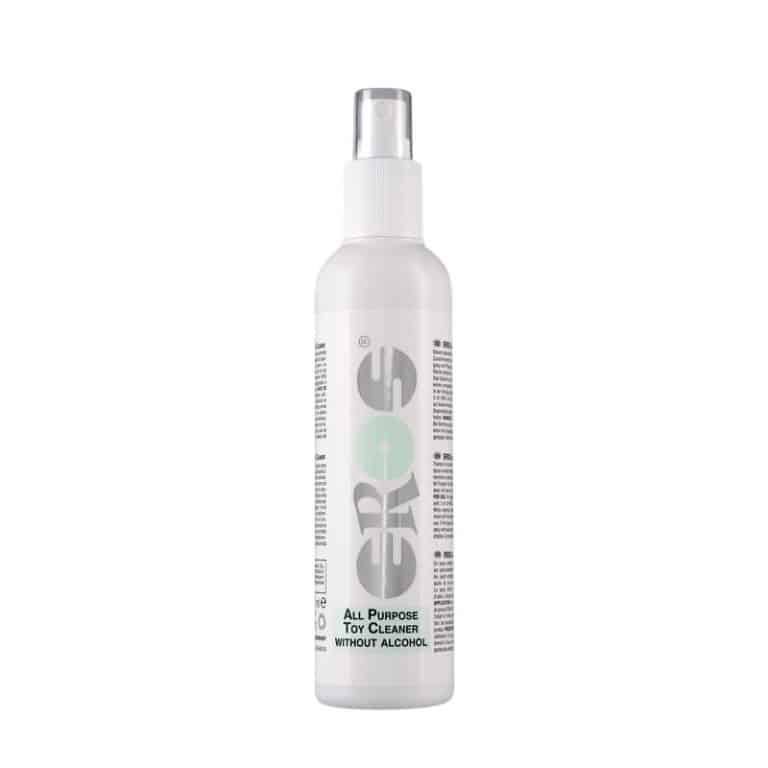
All Purpose Toy Cleaner without Alcohol 200 ml

All Purpose Toy Cleaner without Alcohol 50 ml
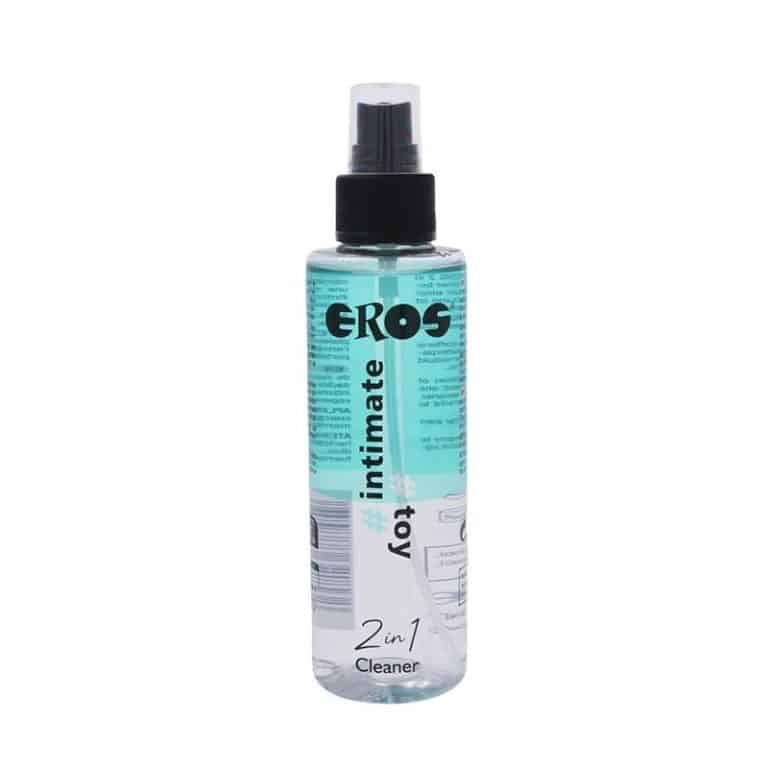
Intimate Toy and Corporal Cleaner 2 in 1 150 ml
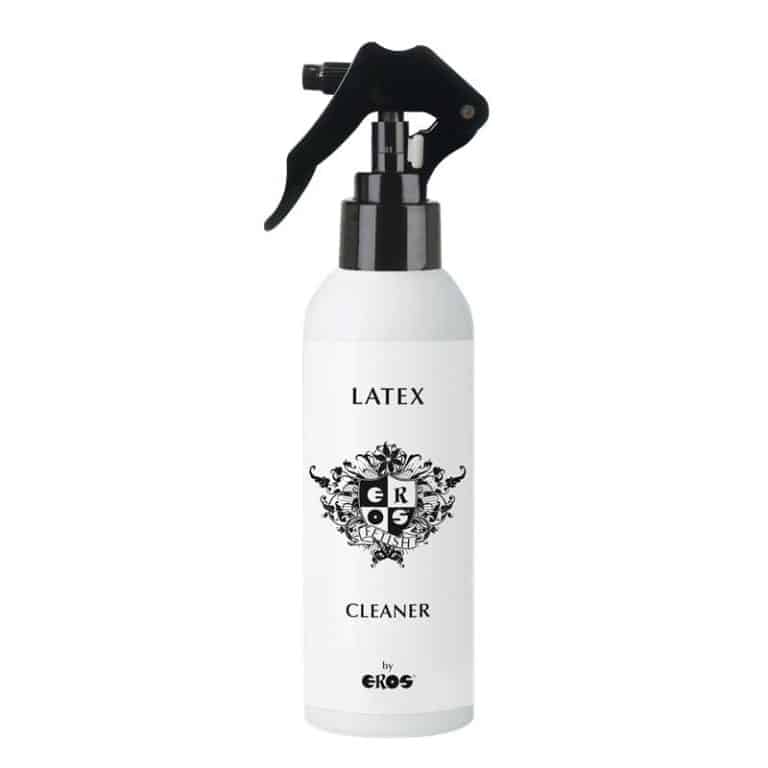
Latex Cleaner 150 ml

Toycleaner Fresh Power 125 ml
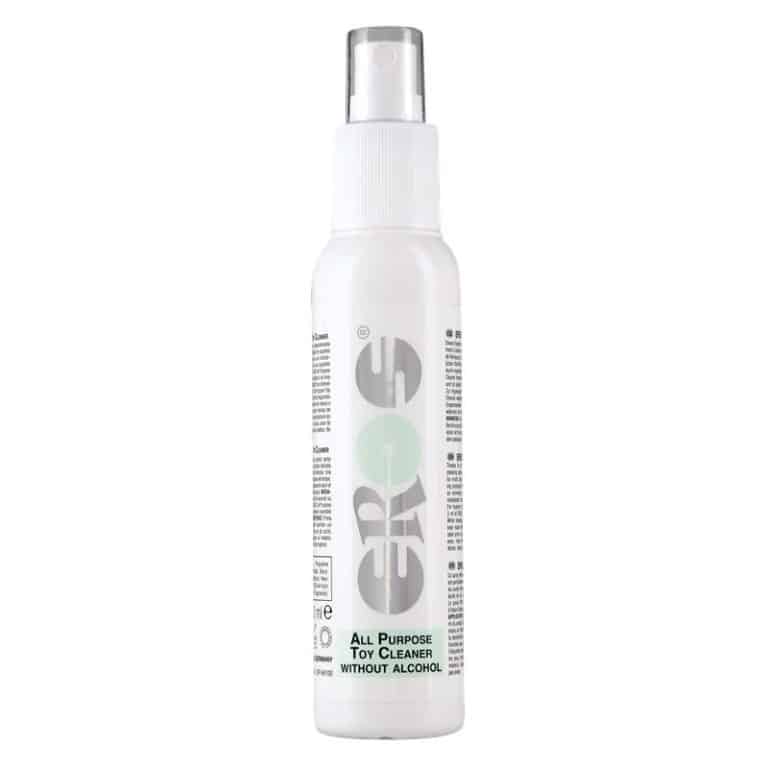
All Purpose Toy Cleaner without Alcohol 100 ml

Intimate and Toy Cleaner 200 ml
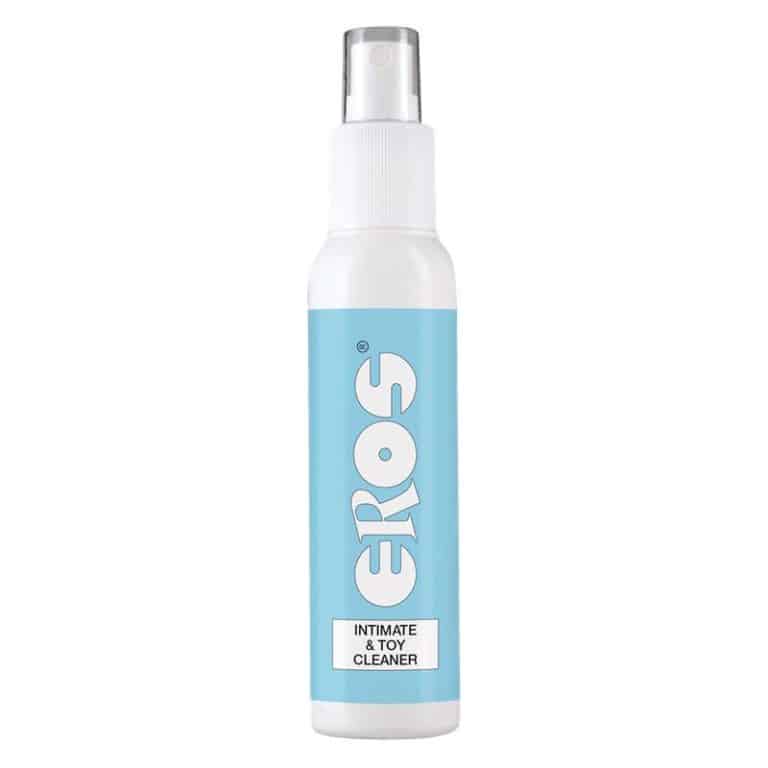
Intimate and Toy Cleaner 100 ml

Intimate and Toy Cleaner 50 ml
Rinse-Required Versus No-Rinse Formulations
Rinse-required toy cleaners use stronger surfactants and antimicrobial agents that provide superior cleaning power but must be washed off with water after application. They are ideal for home use where a sink is readily available — spray, wait 30-60 seconds, rinse under running water, dry. The rinse step removes both the contamination AND the cleaning agent — leaving a genuinely residue-free surface. These formulations can afford to use more aggressive ingredients because the rinse step eliminates them before body contact occurs.
No-rinse (spray-and-wipe or spray-and-air-dry) formulations are designed to be safe without rinsing — their ingredients are mild enough that any trace remaining on the surface after wiping will not cause irritation upon mucosal contact. These are ideal for: travel (no sink access), quick between-use cleaning (switching toys during a session), or situations where convenience is prioritised. The trade-off: no-rinse formulations are typically less aggressive than rinse-required versions — they sacrifice some cleaning power for the safety of remaining on the surface. For routine cleaning of lightly soiled toys: no-rinse formulations are perfectly adequate. For thorough post-session cleaning of heavily contaminated toys (particularly after anal use): rinse-required formulations provide higher assurance.
Material Compatibility — What Toy Cleaners Can And Cannot Contact
Most quality toy cleaners are formulated to be safe for all common sex toy materials — silicone, TPE, ABS plastic, glass, metal, and leather. However: some formulations contain alcohol (isopropyl or ethanol) that can dry out certain materials over time. For silicone toys: alcohol-free formulations are generally recommended for long-term material preservation — though occasional alcohol-based cleaning is unlikely to cause noticeable damage. For TPE and realistic-feel materials: avoid alcohol-based cleaners entirely — alcohol accelerates surface degradation in porous elastomers, causing tackiness, discolouration, and premature breakdown. For glass and metal: virtually any toy cleaner is safe — these materials are chemically inert and unaffected by cleaning agents. Always check the toy cleaner's label for material compatibility statements — reputable brands clearly indicate which materials their formula is safe for.
Ingredient awareness helps identify potential issues. Avoid toy cleaners containing: glycerin (can leave a residue that promotes yeast growth), parabens (potential endocrine disruptors — debated but avoidable), strong fragrances (unnecessary and potentially irritating), and triclosan (an antimicrobial agent that has been phased out of many products due to environmental and health concerns). Prefer formulations that are: fragrance-free, paraben-free, glycerin-free, and pH-balanced for intimate use. The fewer unnecessary additives a toy cleaner contains, the lower the risk of irritation or material incompatibility. The ideal toy cleaner contains only what is needed to clean and disinfect — nothing more.
Frequently Asked Questions
1. Do I really need a dedicated toy cleaner, or is soap enough?
For non-porous materials cleaned immediately after use: mild unscented soap and warm water is adequate for routine hygiene. The soap's surfactants remove organic matter effectively. However: dedicated toy cleaners offer advantages that soap does not — guaranteed residue-free formulation (no moisturisers, fragrances, or additives left behind), antimicrobial action beyond simple surfactant cleaning, material-safe formulation (tested specifically on sex toy materials), and convenience (spray-and-wipe without needing a sink). For porous materials, for anal-use toys, for shared toys, or for anyone with sensitive mucosal tissue: a dedicated toy cleaner provides a meaningful safety margin above soap alone. The practical answer: soap works — dedicated cleaners work better and with less risk.
2. How long should I let the toy cleaner sit before wiping?
Most toy cleaners require 30-60 seconds of contact time for their antimicrobial agents to be effective. Spraying and immediately wiping off does not provide sufficient time for the active ingredients to kill bacteria — you are removing the cleaner before it has finished working. The recommended process: spray generously (covering all surfaces), wait 30-60 seconds (allowing antimicrobial action), then either rinse under running water (for rinse-required formulas) or wipe with a clean cloth and allow to air dry (for no-rinse formulas). Some formulations specify longer contact times on their labels — follow the manufacturer's instructions for optimal effectiveness. Longer is generally better (within reason) — 2 minutes of contact time provides more thorough disinfection than 30 seconds.
3. Can toy cleaners damage silicone toys?
Quality toy cleaners formulated for intimate products: no — they are specifically tested for silicone compatibility. Silicone is chemically inert and resistant to most cleaning agents. However: cleaners containing high concentrations of alcohol (above 60%) may cause slight surface drying with very frequent use over extended periods — this manifests as a slightly less silky surface feel rather than structural damage. For daily-use toys cleaned after every session: choose an alcohol-free toy cleaner to maintain optimal surface quality over years of use. For occasional cleaning: even alcohol-containing formulations are unlikely to cause noticeable effects. The materials most vulnerable to cleaner damage are TPE and cyberskin — not silicone. If your toy is genuine medical-grade silicone: it is essentially impervious to any toy cleaner on the market.
4. Are antibacterial toy cleaners better than regular ones?
"Antibacterial" indicates the presence of specific antimicrobial agents (such as benzalkonium chloride) that actively kill bacteria rather than simply removing them through surfactant action. For routine cleaning of non-porous toys used by one person: the difference is minimal — thorough surfactant cleaning removes the vast majority of contamination regardless of whether bacteria are killed or simply washed away. For higher-risk situations (porous materials, shared toys, anal-to-vaginal transitions, immunocompromised users): antibacterial formulations provide an additional safety margin. The practical distinction: surfactant-only cleaners REMOVE bacteria from the surface. Antibacterial cleaners REMOVE and KILL bacteria. For most users in most situations: both approaches produce acceptable hygiene. For elevated-risk situations: antibacterial provides extra assurance.
5. How much toy cleaner should I use per cleaning?
Enough to visibly coat all surfaces — including textured areas, bases, and any crevices. For a standard vibrator or dildo: 3-5 sprays typically provides adequate coverage. For larger toys or heavily textured items: 6-10 sprays may be needed to ensure all surfaces receive product. Under-application is the most common user error — a light mist that does not fully wet the surface provides insufficient contact for effective cleaning. The cleaner needs to physically contact contamination to remove it — dry spots remain uncleaned. Over-application wastes product but does not cause harm (excess simply drips off or is wiped away). When in doubt: use more rather than less. A bottle of toy cleaner typically lasts 2-4 months of regular use — the cost per cleaning is minimal.
6. Can I use toy cleaner on my body?
Toy cleaners are formulated for object surfaces — not for direct body application. While most quality toy cleaners are safe for incidental mucosal contact (residue remaining on a toy after cleaning), they are not designed or tested as personal hygiene products. For body freshening before or after intimacy: use products specifically formulated for intimate body care — Hygiene Sprays are designed for direct skin and intimate area application with appropriate pH balance and gentleness. The distinction: toy cleaners prioritise antimicrobial effectiveness on inert surfaces. Body products prioritise skin compatibility, pH balance, and microbiome preservation. Using toy cleaner on genital skin may disrupt the natural bacterial balance or cause irritation — particularly for vulvar tissue, which is more sensitive than the toy surfaces the cleaner was designed for.
7. Do toy cleaners expire?
Yes — most toy cleaners have a shelf life of 12-24 months after opening (look for the PAO symbol — a small jar icon with a number indicating months after opening). Over time: antimicrobial agents may degrade and lose effectiveness, surfactants may separate or lose potency, and preservatives may no longer prevent microbial growth within the product itself. Using an expired toy cleaner may provide inadequate disinfection — giving false confidence that the toy is clean when the cleaner's active ingredients are no longer functioning at full strength. Signs of expiration: colour change, unusual odour, separation of liquid layers, or reduced foaming when sprayed. For optimal effectiveness: replace toy cleaners annually even if product remains — the cost is minimal compared to the risk of using a degraded formulation.
8. Is a foam toy cleaner better than a spray?
Neither is objectively better — they serve slightly different use cases. Spray: provides quick, even coverage over large surfaces, penetrates textured areas through mist action, and is fastest for routine cleaning. Foam: clings to surfaces longer (providing extended antimicrobial contact time without dripping), is more visible (you can see exactly where you have applied product), and uses less product per application (foam expands to cover more area than equivalent liquid volume). For textured toys with deep grooves: foam may provide better coverage because it stays in crevices rather than running off. For smooth toys or quick routine cleaning: spray is faster and equally effective. For travel: spray bottles are typically more compact and less prone to accidental dispensing in luggage. Choose based on your typical use pattern rather than assuming one format is universally superior.
9. Can I make my own toy cleaner at home?
It is possible — but not recommended for most users. DIY formulations (typically diluted castile soap, diluted vinegar, or diluted hydrogen peroxide) can provide basic cleaning — but they lack the precise formulation balance of commercial products: correct pH for mucosal safety, appropriate surfactant concentration for effective cleaning without residue, tested antimicrobial efficacy, and confirmed material compatibility across all common toy materials. The risks of DIY: too-concentrated solutions may damage materials or irritate tissue; too-dilute solutions may provide inadequate cleaning; incorrect pH may disrupt vaginal flora; and untested combinations may react unpredictably with specific materials. Commercial toy cleaners cost €8-15 and last months — the savings from DIY are minimal while the risks are meaningful. For the small investment involved: a professionally formulated product provides significantly higher confidence.
10. Should I clean toys before AND after use?
Yes — both are recommended for optimal hygiene. Post-use cleaning removes bodily fluids, lubricant residues, and prevents biofilm formation during storage. Pre-use cleaning removes dust, fibres, and any airborne bacteria that settled on the surface during storage — even if the toy was cleaned after its last use. The pre-use clean can be lighter than the post-use clean: a quick spray-and-wipe or rinse under running water is typically sufficient (since the surface should already be largely clean from post-use cleaning). The post-use clean should be thorough: full application, adequate contact time, complete rinsing or wiping, and thorough drying. This two-stage approach provides the highest hygiene confidence — particularly important for toys used in sensitive areas or shared between partners.
Our Product & Trust Standards
Products curated within this category are evaluated within erotica-shop.eu’s framework for material considerations, product integrity, editorial standards, and customer privacy.